


Editor's Note: This article has been updated with additional content.
Consumer prices rose from 3.4% to 3.7% year-ove-year in September, above the 3.6% economists expected, according to the Bureau of Labor Statistics report released Wednesday.
On a monthly basis, the Consumer Price Index increased 0.6%, matching expectations and accelerating from August's 0.4% pace.
Core inflation, which strips out volatile food and energy prices and is the gauge the Fed watches most closely, rose 0.3% month over month against a 0.2% forecast.
The annual core rate came in at 2.6%, versus 2.5% expected and above August's 2.4%. Both measures of annual inflation still remain above the Federal Reserve's 2% target.
Before the report, traders priced a 22% chance of a second consecutive hike in October, according to the CME FedWatch tool.
What Drove The Increase
Gasoline did most of the work.
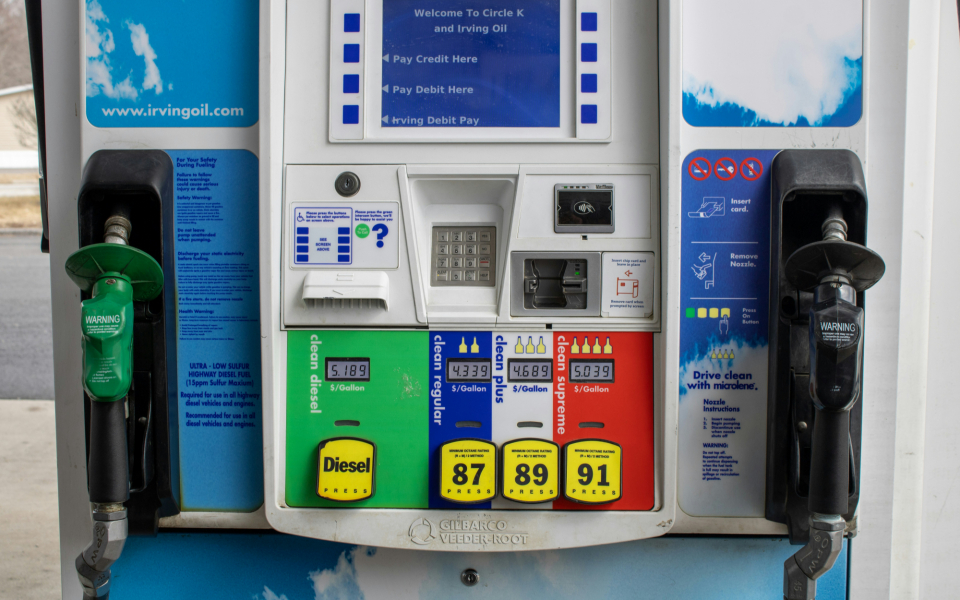
The gasoline index jumped 9.1% in September, accounting for more than half of the monthly increase, the BLS said. The broader energy index rose 5.2%.
Over the past 12 months, energy prices are up 20.4% and gasoline is up 34.2%.
Food prices were unchanged on the month. Food eaten at home fell 0.1%.
Outside of energy, price pressures kept building. Shelter, the largest component of the index, rose 0.4% after a 0.3% gain in August.
Owners' equivalent rent, which estimates what homeowners would pay to rent their own home, rose 0.3%. Rent rose 0.2%.
Used cars and trucks rose 0.7%. Airline fares rose 1.2% on the month and are up 22.4% from a year ago.
What It Means For The Fed
The report arrives two weeks before the Federal Reserve's next meeting on Oct. 27-28.
The Fed raised its benchmark rate by a quarter point to a range of 3.75% to 4.00% on Sept. 16, its first hike in three years, in a unanimous vote. The median projection from the meeting pointed to one more increase before year-end.
On Polymarket, traders now see a 43% chance of a quarter-point hike in October, against 57% for no change.
How Markets Reacted
Stocks fell and Treasury yields jumped after the report.
Contracts tied to the S&P 500 dropped 0.6% to about 7,786 in premarket trading. The Nasdaq 100 lost 0.7% to 30,367, and the Dow Jones Industrial Average slid 0.6% to 51,603.
Small caps fell the most. The Russell 2000 dropped 1.4% to 2,756.
Yields rose across the curve.
The 2-year Treasury yield, the maturity most sensitive to Fed policy, climbed 13 basis points to 4.93%. The 10-year yield rose 9 basis points to 5.31%, and the 30-year yield gained 5 basis points to 5.61%.
The U.S. dollar index rose 0.5% to 102.38.
Gold, tracked by the SPDR Gold Shares
Bitcoin (CRYPTO: BTC) slipped 1.2% to $82,621.
Producer prices follow on Thursday, with economists expecting a 0.5% monthly increase.


