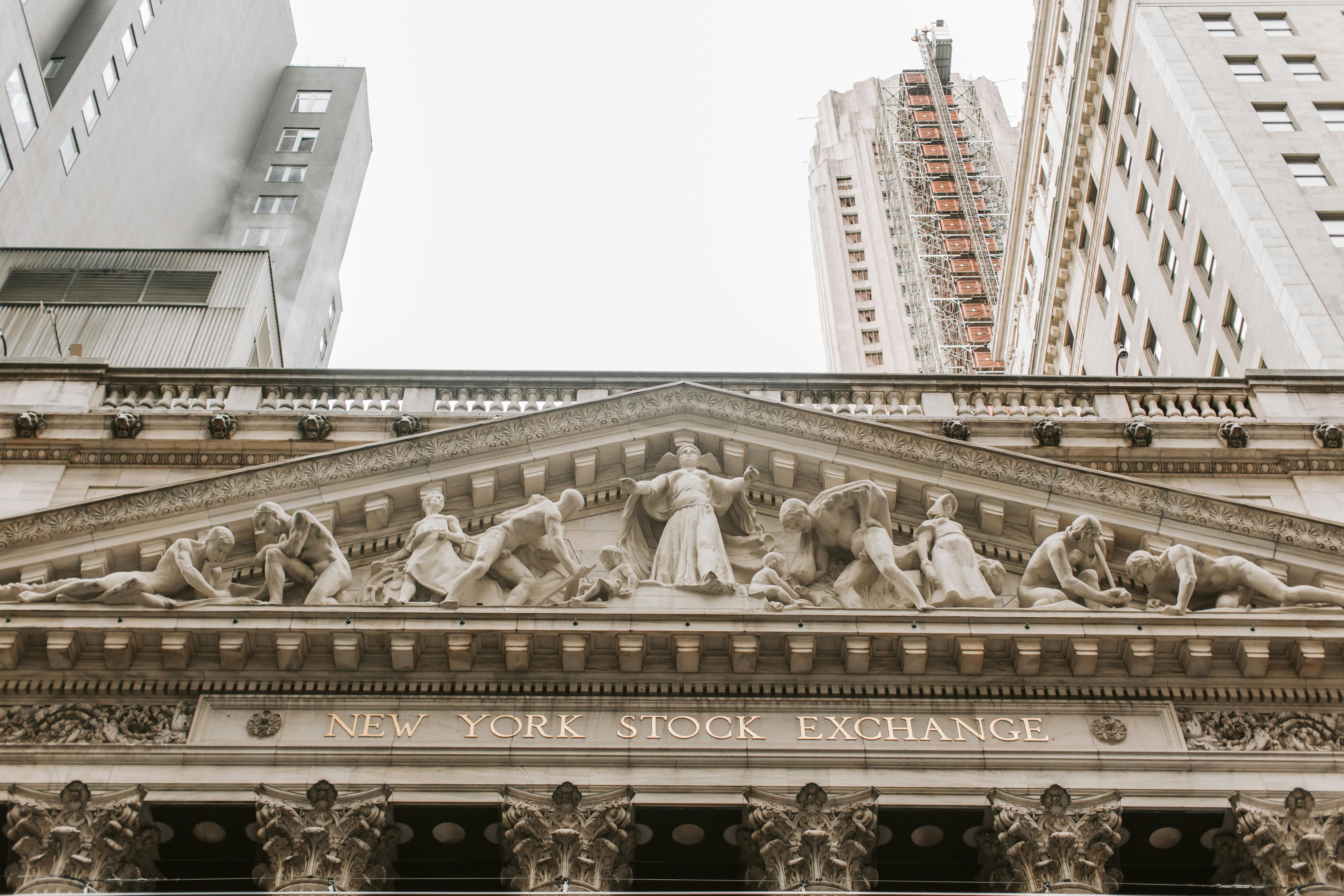
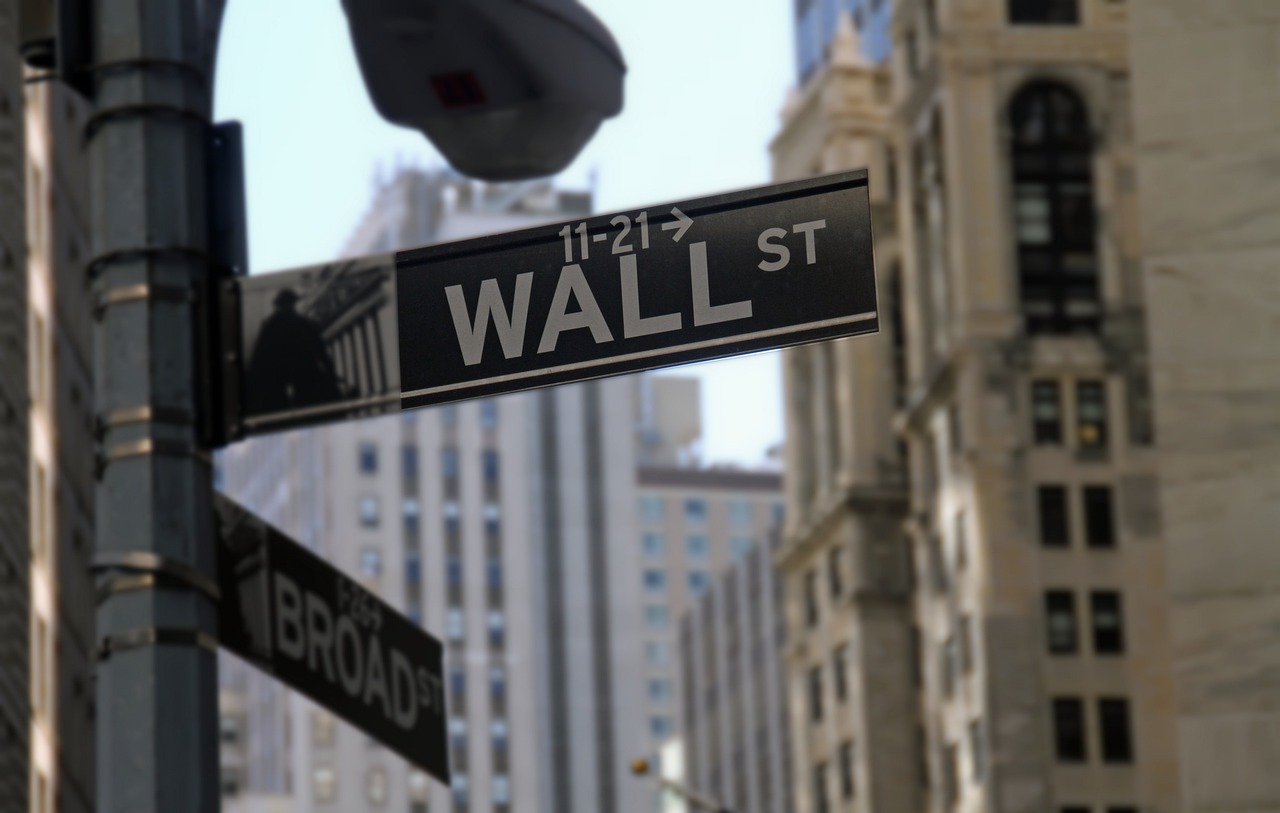


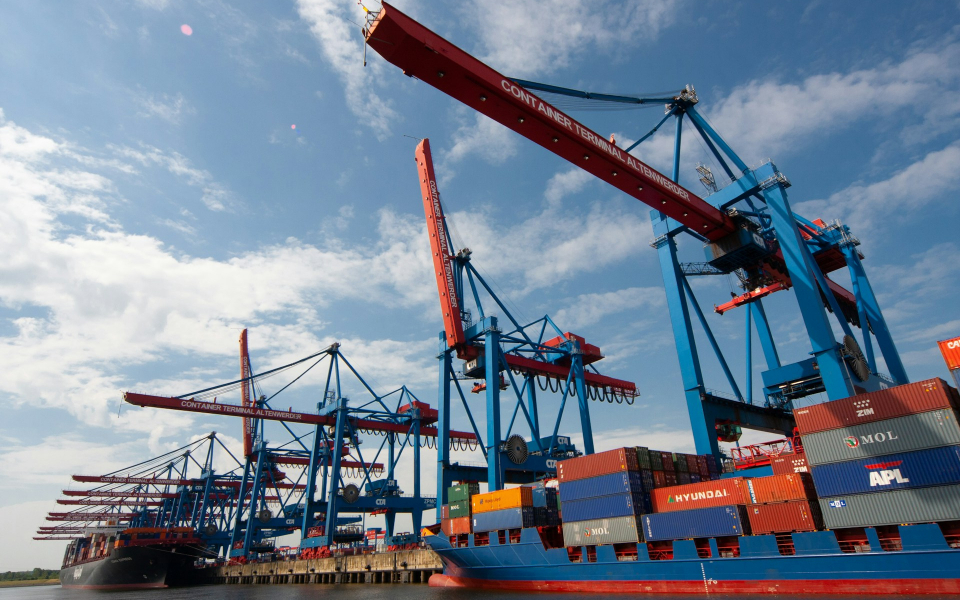
In a fiery Truth Social post Friday morning, President Donald Trump threatened China with a "massive increase of Tariffs" on imports, potentially canceling his planned meeting with Xi Jinping after Beijing unveiled sweeping rare-earth export controls. Markets immediately reacted, with the S&P 500 dropping 1.56% and the Nasdaq falling 2.05% as Wall Street absorbed the escalation.
Trump's response to China's rare-earth crackdown sets up the most significant trade confrontation since early 2025. But here's the uncomfortable truth emerging from economic models: America may suffer deeper economic damage than China from the very tariffs Trump is threatening to impose.
The data tells a counterintuitive story. Research shows American consumers could face an additional 2-4% inflation surge over the next 18 months, just as the Federal Reserve thought it was taming price pressures. Core inflation, already running above the Fed's 2% target, could accelerate toward 6% by mid-2026 if tariffs reach the levels Trump is suggesting.
But the real shock comes from GDP projections. Economic models predict the tariff escalation could slash U.S. GDP growth by 1.5-2% annually, effectively wiping out most economic expansion. That's recession-level impact without typical business cycle triggers. Meanwhile, China faces a comparatively modest 0.8-1.2% GDP contraction, according to analysis by OECD economists.
The Economic Paradox: America's Bigger Pain
The paradox deepens when you examine government revenue. While devastating the broader economy, tariffs would generate a Treasury windfall of $400-500 billion annually, equivalent to 18% of all household income tax payments. It's a massive wealth transfer from consumers to government, funded by higher prices on everything from smartphones to steel.
Sector-by-Sector: Where the Pain Hits Hardest
Consumer electronics face "extreme" vulnerability. Apple Inc.
Automotive companies confront structural challenges that can't be solved with alternative sourcing. Ford Motor Co.
Steel and aluminum processors face the steepest consumer price increases, with costs expected to jump 15-25%. Construction and manufacturing sectors dependent on these inputs will face margin compression or must pass costs to end customers.
Apparel retailers like Target Corp.
The Investment Playbook: Winners and Losers
Smart money is already repositioning. The main insight is that this is more than just about trade. It's a fundamental restructuring of global supply chains that will create distinct winners and losers over the next 3-7 years.
Automation Gets Turbocharged
Companies providing supply chain technology and automation are seeing accelerated adoption as businesses scramble to reduce China dependencies. Honeywell International Inc.
Nearshoring's Biggest Beneficiaries
Mexico emerges as the clearest winner from trade diversion. Companies with significant Mexican operations (like Caterpillar Inc.
Domestic Manufacturing Renaissance
U.S.-based manufacturers with minimal China exposure become premium assets. Deere & Company
Inflation Hedges Resurface
Traditional hedges against policy-induced inflation are seeing renewed institutional interest. Newmont Corp.
The Federal Reserve's Nightmare Scenario
Fed Chairman Jerome Powell faces an impossible policy dilemma. Tariff-driven inflation demands higher interest rates, but the economic slowdown requires accommodation. Recent comments from Fed governors suggest growing concern about core inflation remaining above 2% through 2027, creating a prolonged stagflationary environment not seen since the 1970s.
This puts pressure on rate-sensitive sectors. Real estate investment trusts and utilities could face headwinds as the Fed prioritizes inflation control over growth support. Conversely, financial companies like JPMorgan Chase & Co.
Regional Power Shifts Accelerate
China's response to tariff threats extends beyond tit-for-tat measures. Beijing is accelerating its pivot toward domestic consumption and alternative trade partnerships with ASEAN nations and the Global South. Alibaba Group Holding Ltd.
European companies face collateral damage from the escalating U.S.-China conflict. ASML Holding NV
How to Position Your Portfolio
A balanced approach for the 12-18 month horizon allocates 40-50% to defensive positions: domestic-focused companies with minimal China exposure, inflation hedges including precious metals and commodities, and dollar-denominated assets benefiting from initial currency strength.
Opportunistic growth plays deserve 30-40% allocation: supply chain technology providers, automation companies, and alternative trade partner beneficiaries in Mexico and Southeast Asia. These themes offer 2-7 year investment horizons as structural changes play out.
The remaining 10-20% belongs in tactical positions around negotiation cycles, currency momentum plays, and regional trade diversion opportunities. These higher-risk allocations can capture volatility spikes around summit meetings and policy announcements.
Sector-by-sector vulnerability analysis revealing which industries will hit consumers hardest, with steel and aluminum facing 20% price increases despite only medium China dependency, while highly dependent sectors like electronics and textiles show significant but varied impacts.
In Summary
Trump's tariff escalation threat represents more than trade policy. This is a fundamental restructuring of global economic relationships. While short-term costs appear substantial, the long-term implications may prove more significant than immediate GDP impacts suggest.
As Trump noted in his Truth Social post, there may be "no reason" to meet with Xi given China's "hostile" rare-earth actions. This suggests the economic conflict will intensify before any diplomatic resolution emerges. Investors positioning for a quick deal may face disappointment. The winners will be those who adapt quickly: companies successfully navigating supply chain complexity, investors positioning for structural rather than cyclical changes, and nations capturing diverted trade flows. The old globalized system won't simply snap back after political tensions subside. This is a regime change that will reshape capital allocation for years to come.