



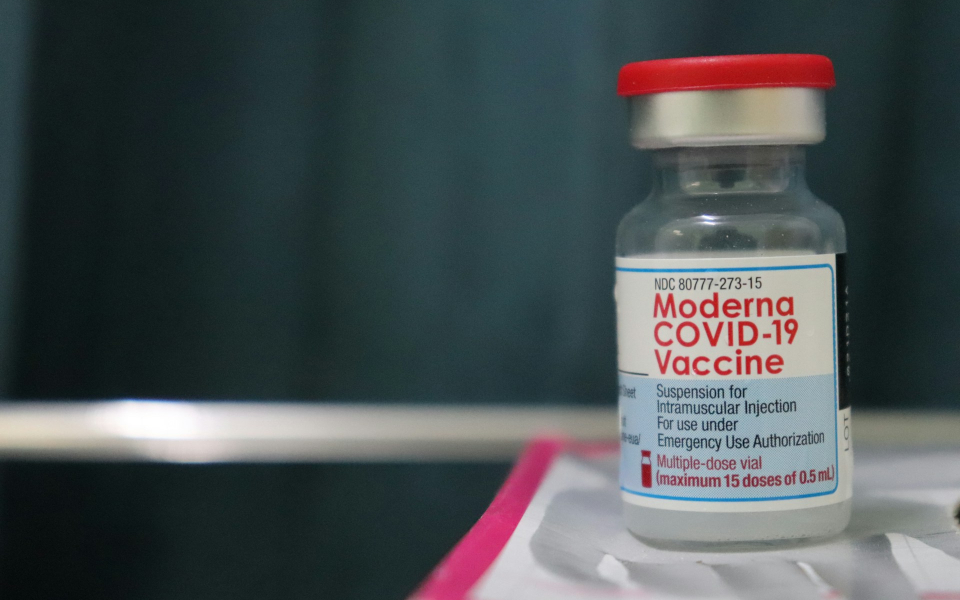
The U.S. Food and Drug Administration (FDA) on Saturday approved Moderna, Inc.'s
"The FDA approval of our third product, mNEXSPIKE...," said Stéphane Bancel, Chief Executive Officer of Moderna.
The FDA's approval of mNEXSPIKE is based on results from a randomized, observer-blind, active-controlled Phase 3 trial, which enrolled approximately 11,400 participants aged 12 years and older.
The primary efficacy objective was to demonstrate the non-inferior vaccine efficacy against COVID-19 starting 14 days after mNexspike compared to that after the comparator vaccine, mRNA-1273 (Spikevax), Moderna's original COVID-19 vaccine.
Participants received either a 10 μg dose of mRNA-1283 or a 50 μg dose of mRNA-1273.
mRNA-1283 showed a 9.3% higher relative vaccine efficacy (rVE) compared to mRNA-1273 in individuals aged 12 years and older, and in a descriptive sub-group analysis, a 13.5% higher rVE in adults aged 65 and older.
In the Phase 3 trial, mRNA-1283 was found to have a similar safety profile to mRNA-1273, with fewer local reactions and comparable systemic reactions.
The most commonly solicited side effects were injection site pain, fatigue, headache and myalgia.
Moderna expects to have mNexspike available for eligible populations in the U.S. for the 2025-2026 respiratory virus season, alongside Spikevax and mRESVIA, the company's approved respiratory syncytial virus (RSV) vaccine.
William Blair writes, "Approval of mRNA-1283 is an incremental win for Moderna, especially considering HHS Secretary Robert F. Kennedy Jr.'s negative public opinion on mRNA COVID-19 vaccines, and we continue to see autonomy and data-driven decisions at the FDA."
"We do not see approval of mRNA-1283 as a massive boost to Moderna's COVID-19 vaccine sales, which we believe are primarily driven by sentiment surrounding the vaccination market in general, but this is a critical step in the regulatory path for the combo flu/COVID vaccine product, mRNA-1083, which uses mRNA-1283 as the COVID-19 component of its formulation," analyst Myles Minter writes.
Analyst Minter says Moderna is still facing challenges from new government policies, including losing about $700 million in funding from the Department of Health and Human Services for its bird flu vaccine project.
In addition, William Blair writes that the company's goal to break even by 2028 is overly optimistic since it would need to more than double its revenue-based on cash costs-to reach that target.
In May, the FDA approved Novavax, Inc.'s NVAX Nuvaxovid for active immunization to prevent coronavirus disease 2019 (COVID-19) caused by severe acute respiratory syndrome coronavirus 2 (SARS-CoV-2) in adults 65 years and older and individuals 12 through 64 years who have at least one underlying condition that puts them at high risk for severe outcomes from COVID-19 (e.g. asthma, cancer, diabetes, obesity, smoking).
Achievement of the U.S. license approval has triggered a $175 million milestone payment from Sanofi SA
Price Action: MRNA stock is up 4.82% at $27.84 during the premarket session at the last check on Monday.