


Wall Street has spent two months watching the Nasdaq unravel.
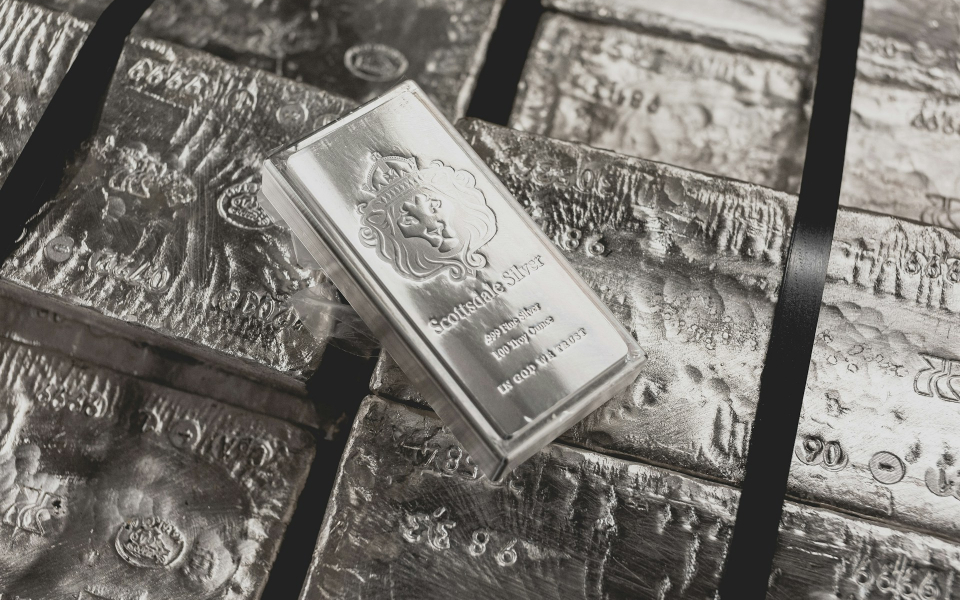
Silver's decline over the past two months has been far deeper.
The Nasdaq 100 - tracked by the Invesco QQQ Trust
Over the same period, silver has fallen 36%, more than twice the Nasdaq 100's percentage decline.
That is the metal's steepest two-month drop since early 1980, when the Hunt brothers' attempt to corner the market collapsed. Silver fell another 5.5% Wednesday to $38.66 an ounce, hitting its lowest level since August 2025.
For the year, silver - tracked by the iShares Silver Trust
Ironically, a little more than a year ago, the world couldn't get enough silver.
In October 2025, London ran so short of physical metal that traders who needed it to settle their positions paid annualized rates of more than 30% just to borrow it for a month. The one-month lease rate hit a record 35%, against a normal level below 1%.
The frenzy carried silver to an all-time high of $121.65 an ounce on Jan. 29. By Nov. 25, it had lost two-thirds of that value.
So how did silver go from a craze to a disgrace in less than 10 months?
From AI Darling to Forced Sale
Last year, the story ran the other way.
Silver rose 148% in 2025, notching its best year since 1979.
Investors treated it as a way to own the AI buildout, since the metal conducts electricity better than any other and goes into chips, servers and the power equipment running data centers.
The U.S. Department of the Interior added silver to its list of critical minerals last year.
What changed is the AI trade itself.
Nvidia Corp.
"Investors sold anything liquid to raise margins on leveraged tech trades," David Morrison, senior market analyst at Trade Nation, said in a note Monday.
He added that silver's weekly momentum readings are "literally off the charts" on the oversold side.
The 1980 Playbook: Margin Rules and a Hawkish Fed
In 1979, Nelson Bunker Hunt and William Herbert Hunt bought so much silver that the price jumped from about $6 an ounce early in the year to near $50 by mid-January 1980.
Then the rules changed.On Jan. 7, 1980, COMEX adopted Silver Rule 7, restricting purchases on margin. Two weeks later, it allowed liquidation-only trading.
At the same time, Paul Volcker's Fed was choking off credit. The effective federal funds rate climbed from 11.4% in September 1979 to 17.6% in April 1980.
In mid-March, the Fed asked banks to limit loans for commodity speculation.
On March 27, 1980, known as Silver Thursday, the metal closed at $10.80, nearly 80% below its January peak. Silver did not revisit those highs until April 2011, 31 years later.
The 2026 version rhymes.
Silver's 31% plunge on Jan. 30, its worst session since 1980, came as exchanges raised margin requirements. Now traders are betting on a Fed rate hike in December, even as tech stocks slide.
Contrarians See Capitulation
Tavi Costa, founder of Azuria Capital, believes the Fed is making a mistake.
"The reality is that everyone is a Paul Volcker inflation hawk until things break," Costa said in a recent note.
He said market-based inflation expectations are at two-year lows and oil has rolled over, which makes hiking into a slowing economy a policy error.
Costa also flagged that India's monthly silver imports just reached their third-highest value on record, a sign that long-term buyers are absorbing what leveraged traders are dumping.
The gold-to-silver ratio, which tracks how many ounces of silver buy one ounce of gold, is back at 86. Costa said readings that high have often marked moments to favor silver over gold.
His fund is concentrated in silver miners, and he acknowledged being caught by the decline earlier than planned.
"In my experience, metals look their best when they look their worst," Costa said in a separate note last week.
The miners partly back that view. The Global X Silver Miners ETF
Not everyone is ready to call a bottom.
Daniel Ghali, head of metals research at Deutsche Bank, said trend-following funds had held near-maximum short positions in precious metals for weeks, yet the selling kept coming.
"The bears are breaking cover," Ghali said in a note last week.
In 1980, silver's collapse started with new margin rules and a Fed willing to break things. In 2026, both have shown up again. The difference is that this time, the Fed's next move has not been made yet.
SLV Price Action: iShares Silver Trust shares were down 4.61% at $35.14 at last check Wednesday, according to Benzinga Pro data.


