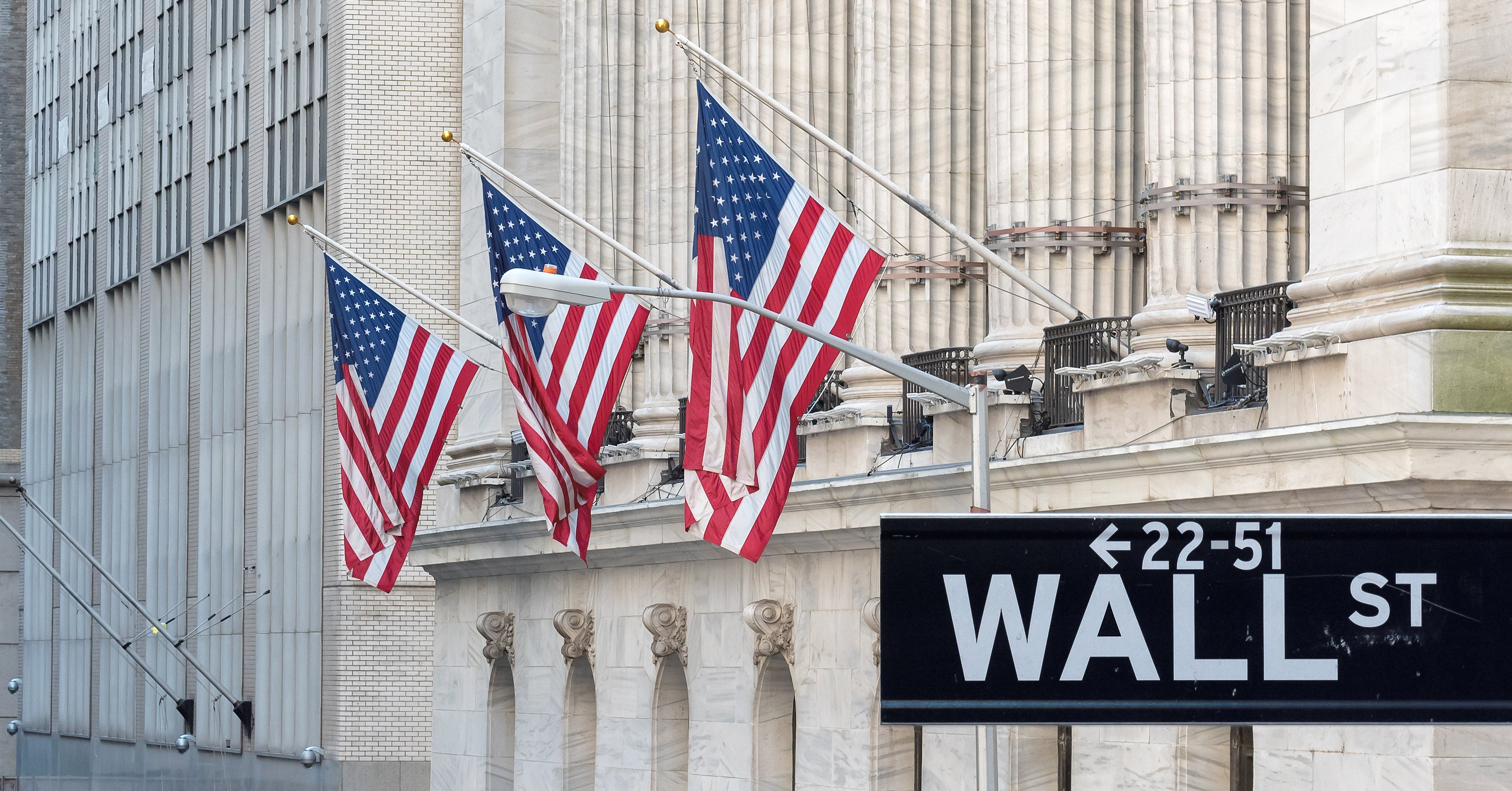



Stocks fell lower on Friday as key economic readings and new U.S. tariff news weighed on market outlooks. The Dow Jones Industrial Average dropped over 400 points, while the S&P 500 Index and Nasdaq Composite lost about 1% and 1.4%, respectively.
Here's how the market settled to close out the week:
S&P 500 Index
Dow Jones Industrial Average
Nasdaq Composite Index
Market sentiment turned sour on Friday after President Donald Trump announced he was planning reciprocal tariffs on trading partners, signaling that tariffs could increase broadly to equal those imposed on the United States.
"I'll be announcing that next week reciprocal trade, so that we're treated evenly with other countries," Trump said at a press event on Friday. "We'll have a news conference, and we'll lay it out pretty simple."
These comments followed earlier consumer sentiment and jobs data that raised inflation concerns at the end of a volatile trading week.
Consumer Sentiment fell to 67.8 in early February, the University of Michigan's consumer survey showed Friday, as Americans expect the inflation rate for one year ahead to be 4.3%, a 1 percentage point increase from January and the highest level since November 2023. Economists polled by Dow Jones anticipated the month's preliminary reading to come in at 71.3.
"Many consumers appear worried that high inflation will return within the next year," said Joanne Hsu, director of the Surveys of Consumers, in a statement. "This is only the fifth time in 14 years we have seen such a large one-month rise (one percentage point or more) in a year-ahead inflation expectations."
January's Jobs Report showed the U.S. economy added 143,000 private payrolls, the Labor Department reported separately on Friday, below December's upwardly revised print of 307,000 additions and below the 169,000 expected by economists. Notably, the unemployment rate fell to 4% on the month.
"A lower-than-expected January payrolls number was more than offset by upward revisions to November and December's totals and a downtick in the unemployment rate," said Ellen Zentner, chief economic strategist at Morgan Stanley Wealth Management, in a note following the report. "Those who'd hoped for a soft report that would nudge the [Federal Reserve] back into rate-cutting mode didn't get it."
On the Earnings Front:
Amazon
Moreover, Amazon expects revenue growth of only 5% to 9% in its current quarter, which would mark its slowest slow on record at the low end of the range.
CFO Brian Olsavsky said the company expects to increase capital expenditures to $100 billion in 2025, an increase from the $83 billion spent in 2024. The increase in spending "primarily relates to AWS, including to support demand for our AI services, as well as tech infrastructure to support our North America and international segments."