



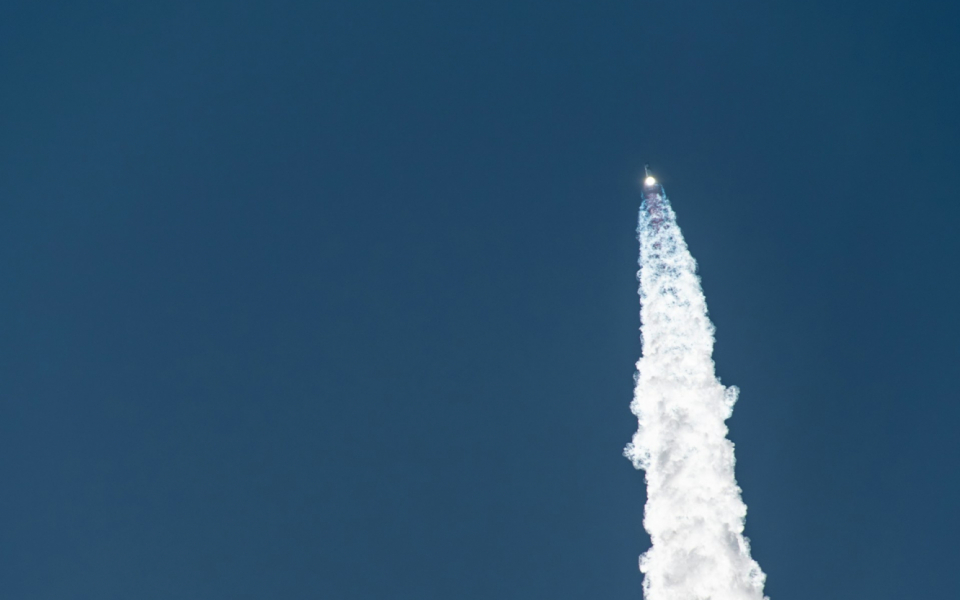
Elon Musk's SpaceX
Weeks earlier, rival Blue Origin watched a rocket explode on the pad in a fireball compared to a nuclear blast.
The timing stung, because the Jeff Bezos-backed Blue Origin had been closing the gap between the two space companies.
A week before the blast, Bezos told CNBC the company was finally ready to take on outside investors, a sign it was gaining ground.
How An Explosion Moved The Odds
On May 28, a New Glenn rocket exploded on the pad during a ground test of its engines. The blast destroyed the rocket and badly damaged Blue Origin's only launch site able to fly New Glenn, the vehicle meant to lift its Blue Moon lunar lander.
On Kalshi, the odds of Blue Origin reaching the moon before SpaceX fell to 45%, from above 69% before the explosion.
"We will fly again before the end of this year," Blue Origin CEO Dave Limp said, but some employees told the Financial Times they doubt it.
Musk has shifted SpaceX's focus to building a base on the moon rather than reaching Mars, its original goal.
The Capital Gap
SpaceX has two cash engines Blue Origin lacks: Starlink's billions in profit and its record IPO, which raised $75 billion. Bezos still funds his rocket company by selling Amazon stock.
Part of SpaceX's lofty valuation comes from AI, not just rockets. The newly public company acquired xAI and plans to operate data centers in orbit.
AST SpaceMobile Inc.
SpaceX entered its second trading day Monday up roughly 6% above $170, already past two of three early analyst targets.